Brazil's Supreme Court to Hear Key Amazon Environmental and Land Cases
Brazil's supreme court will review several cases impacting Amazon protections and indigenous land rights. These cases arise from congressional actions that environmentalists argue contravene constitutional provisions.
Key takeaways
- Brazil's supreme court will review cases concerning Amazon environmental protections and indigenous land rights.
- Congressional actions supported by agribusiness have led to challenges against environmental safeguards.
- The Lula administration faces legislative hurdles due to a conservative congress where agribusiness holds significant sway.
- The court's decisions are seen as a critical defense for environmental regulations and indigenous territories.
- The expansion of agriculture is a primary driver of deforestation in the Amazon.
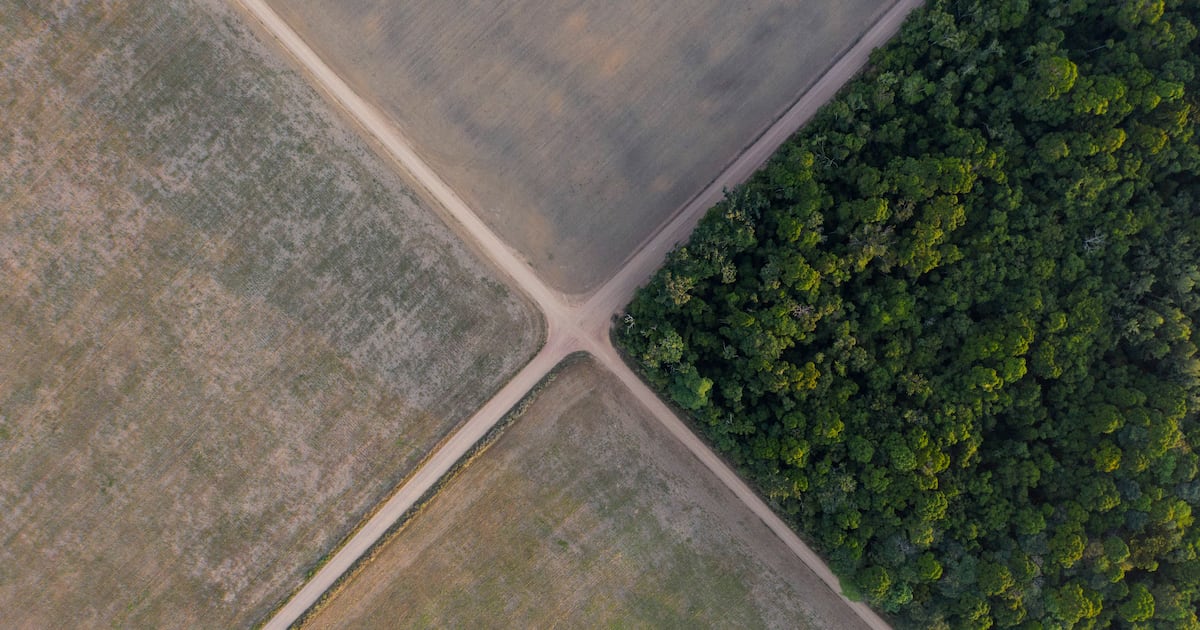
Brazil’s supreme court is preparing to adjudicate a series of cases that could significantly alter the framework of protections for the Amazon rainforest and its indigenous inhabitants. The legal challenges encompass issues ranging from indigenous territorial rights to recent legislative changes that have diminished environmental safeguards and approved infrastructure development.
What Happened
These cases have reached the supreme court following legislative actions in Brazil’s congress, characterized by a conservative majority influential with agribusiness interests. The administration of President Luiz Inácio Lula da Silva has attempted to counter these measures through outright or partial vetoes. However, lawmakers have successfully overridden these objections, leading the disputes to the highest court. Environmental advocates consider the supreme court to be the principal remaining defense against the erosion of environmental regulations in Brazil.
Key Facts
- Brazil’s supreme court is scheduled to hear cases concerning the Amazon rainforest and indigenous communities.
- These cases address indigenous land rights and recent rollbacks of environmental safeguards and infrastructure projects.
- A largely conservative congress approved measures that environmentalists claim violate constitutional rights.
- President Luiz Inácio Lula da Silva vetoed some of these measures, but lawmakers overrode his objections.
- Environmental advocates view the supreme court as the final defense for environmental protections in Brazil.
- Agribusiness, a major economic sector, holds significant influence and a majority in Brazil’s congress.
- The Lula administration faces legislative constraints and less negotiation leverage compared to previous governments.
- Brazil is a leading global producer of soybeans and beef, with significant exports to China.
- Expansion of agriculture, particularly for cattle ranching and soybeans, is the primary driver of deforestation in Brazil, largely within the Amazon.
- On Friday, the supreme court began reviewing motions related to a 2025 ruling concerning indigenous land claims.
- This review concerns the “time limit” thesis, which would restrict indigenous land claims to territories occupied or disputed as of October 5, 1988.
- Supporters of the time limit thesis argue it provides legal certainty for landowners, while indigenous groups contend it ignores historical expulsions.
Background
The cases highlight the challenges facing the Lula administration. Despite efforts to reduce deforestation and promote ecological investments, the government has found it difficult to overcome the influence of agribusiness in congress. Suely Araújo, policy coordinator at the Climate Observatory, noted that the government often opposes anti-environmental legislation but lacks the political strength to secure congressional support. Agribusiness groups argue they oppose illegal deforestation and point to increased productivity alongside declining forest clearing.
Why It Matters
The Amazon rainforest plays a critical role in regulating global climate and rainfall patterns, storing substantial amounts of carbon. The release of this carbon could significantly accelerate global warming. The supreme court's decisions on these cases will determine the future of indigenous lands and the effectiveness of environmental protections in Brazil, a country that is the world’s largest producer of soybeans and beef, with expansion in these sectors being a leading cause of Amazon deforestation.
Sources reviewed
Project Chintan independently synthesized and analyzed information cross-checked across the sources listed above.
Related stories
New Forest Wildfire Continues to Burn Amid Hottest Summer Forecast

Jharkhand protests, Adani land clearance, Delhi fraud feature in Indian report

Supreme Court to Hear Tamil Nadu's Cauvery Water Plea on August 13