
ANWB Warns of Phishing Emails Offering Fake Emergency Kits and Radar Detector Discounts
Scammers are sending fraudulent emails impersonating the ANWB, offering fake emergency kits and discount codes for an illegal radar detector. The ANWB is investigating these phishing attempts.
Key takeaways
- Scammers are sending fake emails claiming to be from the ANWB.
- These phishing emails promote non-existent emergency kits and discount codes for an illegal radar detector.
- The ANWB is investigating these fraudulent communications.
- Key signs of phishing include vague sender domains and links to untrustworthy websites.
- If you have interacted with a suspicious email, contact the ANWB and your bank.
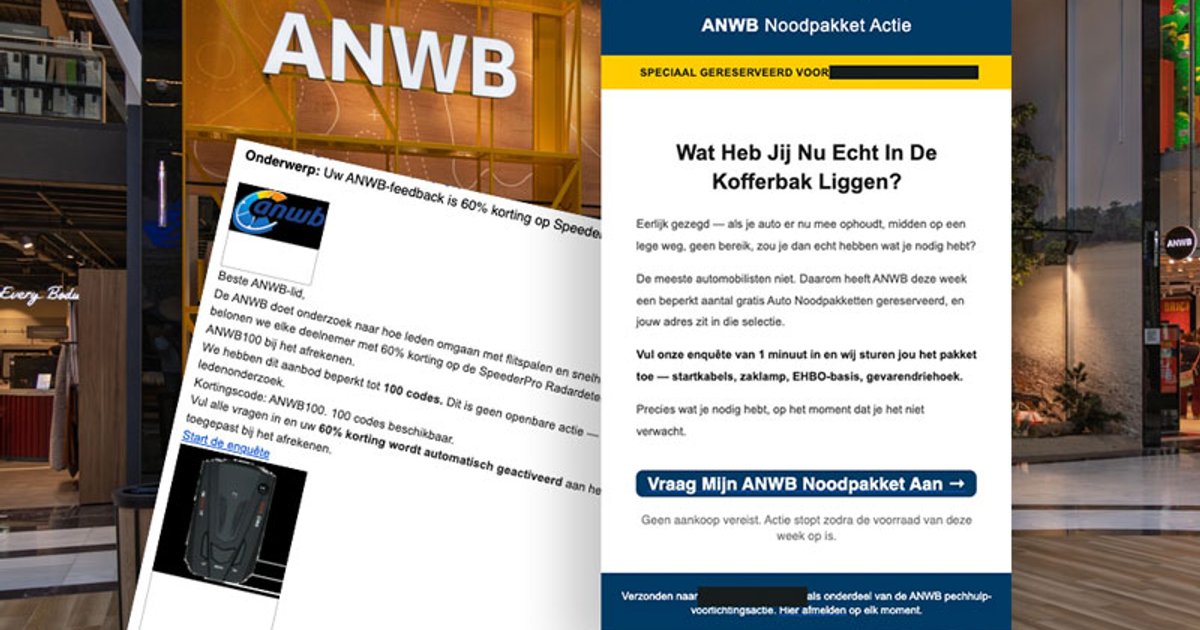
The ANWB is alerting its members to fraudulent emails that are circulating, impersonating the organization. These scams aim to trick recipients into clicking malicious links or divulging personal information.
One type of phishing email promotes a supposed emergency kit containing items like jump starters, a flashlight, a first-aid kit, and a hazard triangle. Another fraudulent message offers a discount code, 'ANWB100', for 60% off a 'SpeederPro' radar detector. This offer is linked to the ongoing European speed camera marathon, which concludes on August 9.
The ANWB stated that they are investigating how members interact with speed cameras and speed checks. However, the SpeederPro detector itself is illegal in the Netherlands. The organization urges individuals not to engage with these deceptive emails, emphasizing that they are entirely fake.
Several indicators suggest these emails are not from the ANWB. They are sent from vague email domains such as '@nttu.edu.vn' and '@0UP2F5VOXRY50T.com', whereas the ANWB uses its official 'anwb.nl' domain. The links within these messages lead to untrustworthy websites like 'dollaremails.com', which are not affiliated with the ANWB. The scam emails also employ manipulative tactics, such as claiming only 'one hundred exclusive discount codes' are available, to pressure recipients into clicking quickly. Furthermore, the emails often lack the ANWB's official formatting and logo.
Individuals who have clicked on links in these emails are advised to contact the ANWB's customer service. If a device may be infected with malware, a virus scan is recommended. If bank details have been shared or money transferred, it is essential to contact one's bank or credit card company.
Sources reviewed
Project Chintan independently synthesized and analyzed information cross-checked across the sources listed above.
Related stories

Kadapa Police Nab Two Suspended Officials in ₹3.80 Crore Job Scam
Scammers Target Dutch Taxpayers with Fake Refund and Payment Scams

Two Arrested for Impersonating TN Minister to Broker Cabinet Post
