
What happens when you pull the alarm chain on a moving train? Indian Railways explains
Indian Railways explains how the alarm chain works, stating it triggers a brake-pressure change to stop a moving train in emergencies. It warns against misuse, notes potential delays, and cites penalties under the Railways Act 1989.
Key takeaways
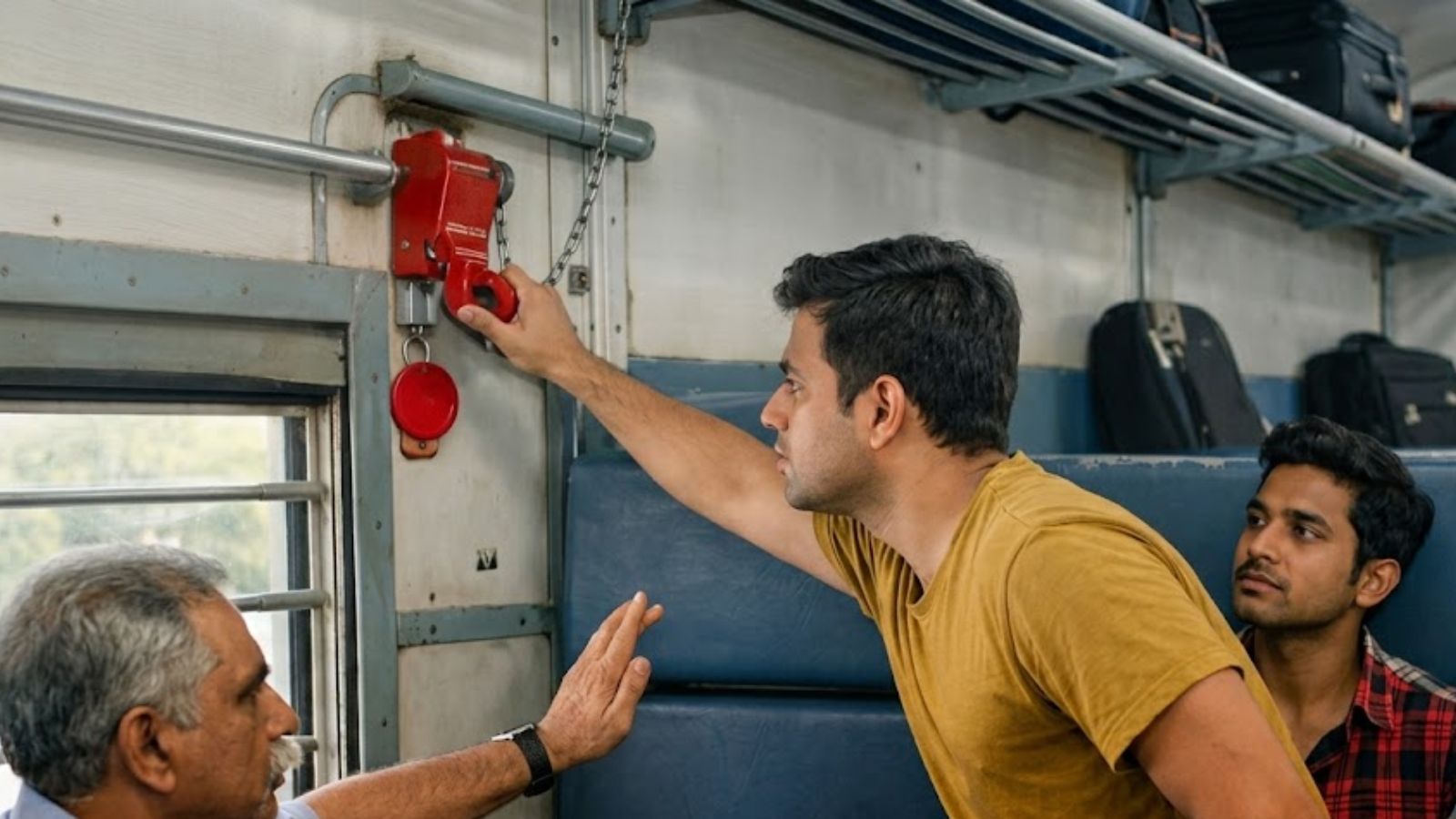
- Pulling the alarm chain triggers air release from the brake pipe, lowering brake pressure and slowing the train.
- The action is detected by the loco pilot via the brake-pressure gauge and is signaled by three horn sounds and a hissing noise in the affected coach.
- Alarms should be used only in genuine emergencies; misuse can cause delays and is punishable under the Railways Act, 1989.
What Happened
The alarm chain in Indian Railways coaches is connected to the train's main brake pipe via a vent valve. When pulled, the valve opens and air escapes from the brake pipe, causing brake pressure to drop and the train to slow. The loco pilot observes this change on the pressure gauge and brings the train to a stop. Three horn sounds signal to the guard and security personnel that the alarm chain has been pulled. A noticeable hissing sound from the affected coach accompanies the release of air, aiding staff in identifying the location. After the reason is checked and the chain is reset, the train can resume travel. Pulling the alarm chain is intended for genuine emergencies only.
Railway staff may attend to the situation at the stopped train. If the train is at a station, staff on the platform handle the incident; if it occurs in a block section, the guard and assistant loco pilot address the specific coach. The Railway Protection Force can trace and question the person involved.
Why It Matters
Using the alarm chain can cause delays not only for the train involved but also for other trains on the same route, particularly when the chain is pulled unnecessarily. The railway authority has highlighted that such actions disrupt schedules and inconveniences multiple passengers. The chain should be used only when safety is at risk, such as medical emergencies, falls or slips, fires, or serious security incidents near a station.
Background
Railways have repeatedly urged passengers to reserve alarm-chain use for genuine emergencies, noting that unscheduled stops affect timetable integrity and may lead to broader delays. The explanation includes a standard brake-system interaction and the procedure followed by staff to verify incidents and reset the chain.
Key Facts
- The alarm chain connects to the brake pipe via a vent valve; normal brake pipe pressure is about 5 kg/cm2.
- Pulling the chain causes the valve to open, air to escape, brake pressure to drop, and the train to slow down.
- The loco pilot reads the pressure change on a gauge and applies a stop as needed.
- Three horn sounds indicate to the guard and security personnel that the alarm chain was pulled.
- A noticeable hissing sound accompanies the escaping air from the affected coach.
- After verification, the chain is reset and the train may resume movement.
- Pulling the alarm chain is restricted to genuine emergencies—medical needs, near a station, falls, fires, or serious security incidents.
- Unnecessary alarm-chain pulling is punishable under Section 141 of the Railways Act, 1989.
What Happens Next
Once the train stops due to an alarm chain pull, railway staff assess the underlying reason, provide necessary assistance, and determine if the journey should continue. If a misalignment with timing or safety is discovered, staff may proceed with standard checks before resuming service.
Sources reviewed
Project Chintan independently synthesized and analyzed information cross-checked across the sources listed above.
Related stories

Railways overhauls RailMadad portal for water, food and OTP issues
India, Bangladesh to discuss resumption of cross-border passenger trains
Nagercoil station to gain nine lines and two more platforms