
Underlying Continuity: The Persistent Pentagon-Rawalpindi Military Alliance
Recent high-level engagements between Islamabad and Washington reveal a military partnership that persists despite years of public tension and the 2011 Abbottabad raid. The relationship remains anchored by institutional alignment between the Pentagon and Pakistan’s military leadership.
Bureaucratic Geography and Strategic Alignment
An examination of Washington’s institutional framework clarifies Pakistan's standing. While culturally rooted in South Asia, the United States often categorizes Pakistan within its Middle Eastern and North African bureaucratic structures. The Pentagon’s U.S. Central Command (CENTCOM) incorporates Pakistan into its Area of Responsibility alongside the Middle East, specifically excluding India. This strategic grouping places Pakistan in the same theater as Gulf states, reflecting a shared focus on military logistics, forwarding basing, and security challenges.
This alignment persists at the State Department as well. Despite falling under the Bureau of South and Central Asian Affairs, higher-level planning within the National Security Council frequently treats Pakistan as part of the “Near East.” Functional cooperation in counterterrorism and energy security reinforces these ties, linking Islamabad to the Islamic world and the Gulf rather than strictly to its immediate neighbors.
The Shadow of Abbottabad and Afghan Logistics
The history of this partnership is defined by deep-seated tension and mutual necessity. On May 2, 2011, Operation Neptune Spear resulted in the death of Osama bin Laden in Abbottabad—a town located far from the Afghan border in the Khyber Pakhtunkhwa province. The discovery of the world’s most wanted man deep inside Pakistani territory cemented a layer of mistrust that continues to shade bilateral relations. During the decade-long war in Afghanistan, Karachi served as the indispensable logistical hub for American supplies, even as personnel faced frequent ambushes and looted shipments.
Renewed Engagement in a Post-Withdrawal Era
Many observers predicted that the 2021 U.S. withdrawal from Afghanistan would terminate Pakistan’s strategic utility. However, a recent resurgence in diplomacy suggests otherwise. General Asim Munir’s visit to the United States, which included a luncheon with Donald Trump, has sparked global analysis. Several theories attempt to explain this pivot:
- Potential extraction of rare earth minerals within Pakistani territory.
- The possible deployment of Pakistani troops to support American interests in the Middle East.
- Emerging developments in the cryptocurrency sector.
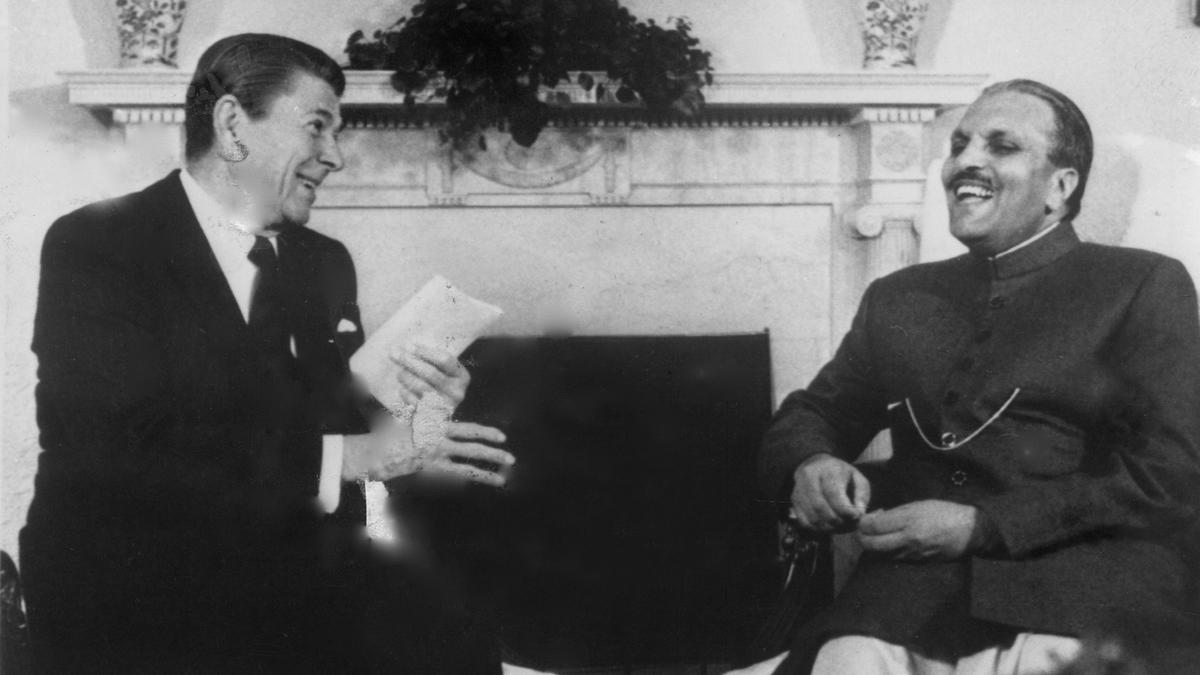
- The historical tendency for military-to-military ties to strengthen during Republican administrations.
Ultimately, the enduring link between the Pentagon and the Pakistani military establishment remains a constant. Even when economic leverage is minimal and counterterrorism priorities shift, the geographic reality of sharing borders with Iran and Afghanistan ensures that Pakistan remains a focal point for the American defense apparatus.
Source: The Hindu — World