
Redefining Resistance: How Rang De Basanti Rewrote the Rules of Political Cinema
Rakeysh Omprakash Mehra’s Rang De Basanti emerged as a cinematic catalyst that bridged the gap between historical revolution and modern civic activism. By blending dual narratives, the film redefined how Indian youth engage with patriotism and systemic corruption.
Key takeaways
- Rang De Basanti popularized the use of candlelight vigils as a form of peaceful protest in India, notably influencing the Jessica Lal justice campaign.
- The film employs a dual-narrative structure that contrasts 1920s Indian revolutionaries with a cynical group of modern-day university students.
- The plot centers on a defense procurement scandal involving faulty MiG aircraft parts, leading the protagonists to radical political action.
- Director Rakeysh Omprakash Mehra integrated A.R. Rahman’s modern score to make historical themes accessible to the millennium generation.
- The film explores complex colonial perspectives through the character of James McKinley, a British jailer troubled by the treatment of Indian prisoners.
The Anatomy of a Modern Classic
In a biting critique of national identity, Aamir Khan’s character Daljeet describes India as a nation with one leg in the past and one in the future, effectively neglecting the present. This observation serves as the thematic backbone for Rang De Basanti, a film that broke traditional storytelling molds by running historical and contemporary narratives in parallel. The production did not just entertain; it provided a blueprint for future filmmakers to address social complexities through a sophisticated, multi-layered storyboard.
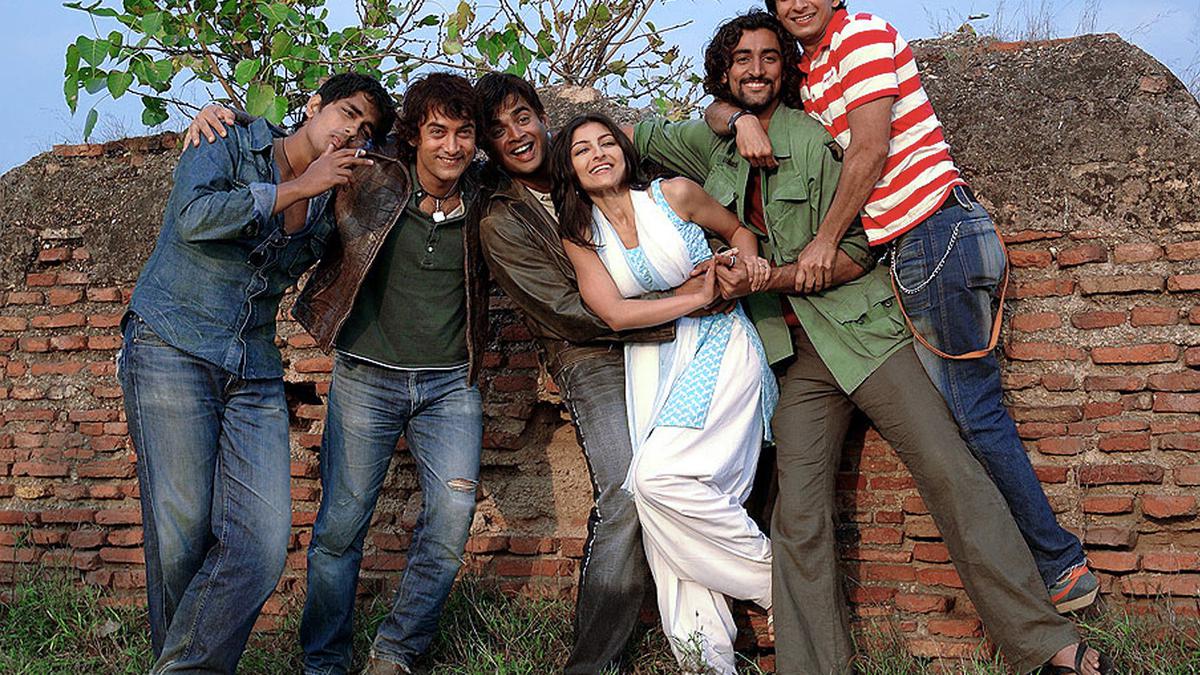
The film follows British documentarian Sue McKinley (Alice Patten), who arrives in India driven by the private diaries of her grandfather, James McKinley, a British jailer during the Raj. Her mission to film the lives of revolutionaries Bhagat Singh, Chandrasekhar Azad, Rajguru, Ramprasad Bismil, and Ashfaqullah Khan initially hits a wall of apathy. She encounters a group of Delhi University students—DJ, Sukhi, Aslam, Karan, and Laxman Pandey—who are initially disconnected from their heritage. This ensemble represents a cross-section of Indian demographics, covering diverse religious backgrounds and socioeconomic classes.
From Apathy to Activism
The narrative pivot occurs when Flight Lieutenant Ajay Rathod (Madhavan) dies in a crash caused by substandard MiG fighter jet components. When the defense minister slanders the deceased pilot to mask procurement corruption, the group’s historical roles as revolutionaries bleed into their reality. A peaceful candlelight vigil at India Gate, met with brutal police suppression, shifts their trajectory from passive mourning to radical action.
- Historical Parallel: The students' transformation mirrors the radicalization of the 1920s revolutionaries they portray.
- Cinematic Influence: The film's depiction of candlelight protests was later mirrored in real-world movements, such as the Jessica Lal murder case justice campaigns and Anna Hazare’s 2011 anti-corruption drive.
- Global Perspective: By exploring the moral conflict of Jailer McKinley, the film avoids binary portrayals of colonial history, showing the internal struggle of a man caught between duty and conscience.
A Technical and Cultural Milestone
Director Rakeysh Omprakash Mehra combined his background in commercial advertising with A.R. Rahman’s rhythmic score to create a high-energy aesthetic that resonated with the millennium generation. Unlike typical Bollywood fare, the film concludes on a somber note: the protagonists hijack a radio station to confess their assassination of the corrupt minister, only to be executed by state forces to ensure their narrative is silenced. This bold ending cemented the film's status as an academic and cinematic reference point for political dissent in the 21st century.
Source: The Hindu – Entertainment
Related stories
