
MEA pushes back on Wang Yi’s ‘India respects China sovereignty’ remark attributed to Jaishankar
4 min readNew DelhiJul 24, 2026 08:53 PM IST
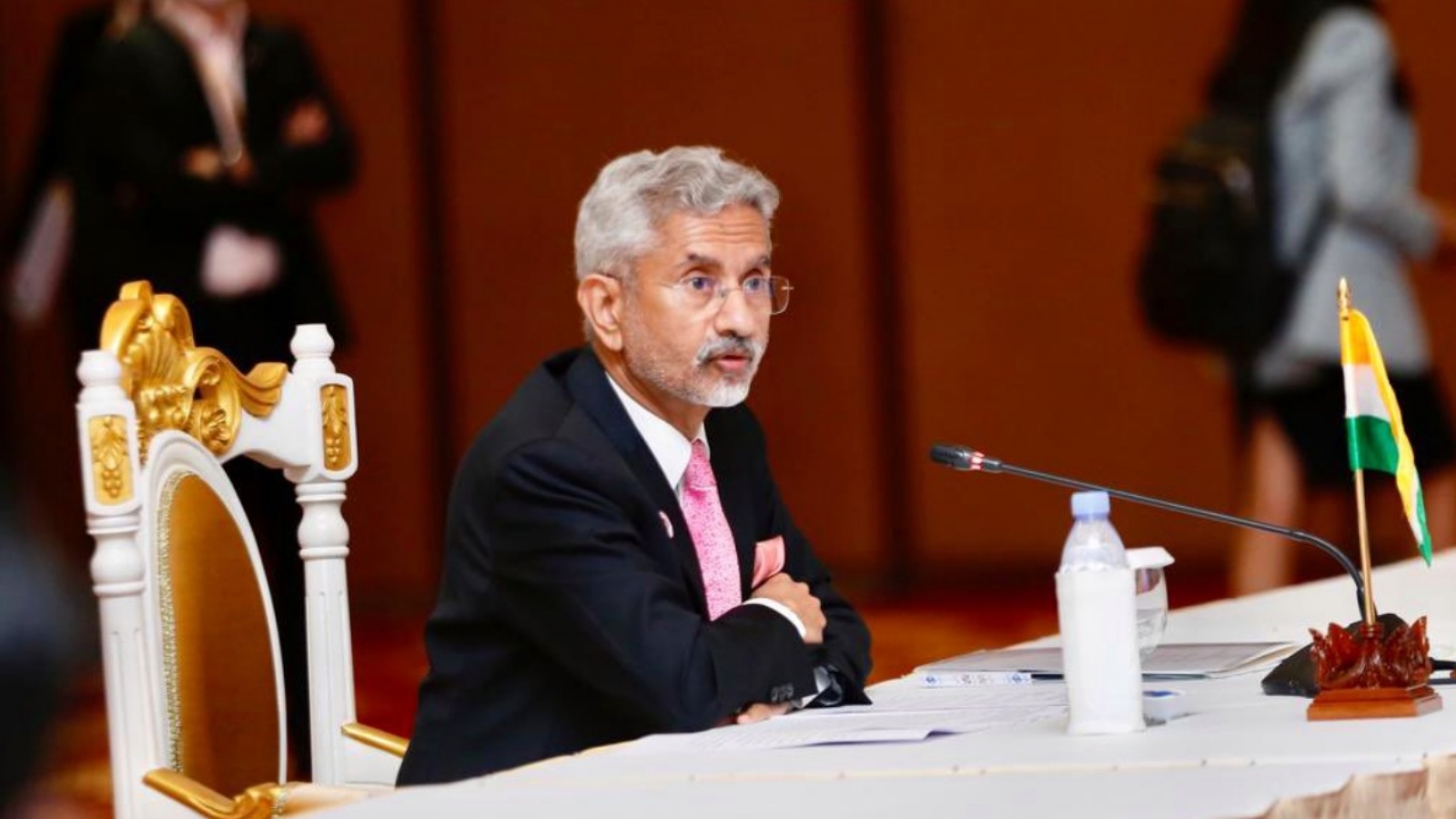
 Jaishankar had said, “It is natural that as two large and important nations, and that too proximate neighbours, India and China would have their own particular interests. (File Photo)
Two days after China claimed that External Affairs Minister S Jaishankar had told Chinese Foreign Minister Wang Yi that India’s positions on issues concerning Taiwan and Xizang (Tibet) have not changed, and that India respects China’s sovereignty, Delhi pushed back on Friday, clarifying that what Jaishankar actually said was “when it comes to sovereignty issues, it is actually India that should be and is raising them”.
Jaishankar and Wang met in Manila, The Philippines, on July 22 on the sidelines of the ASEAN and East Asia foreign ministers meeting, where the Indian minister had underlined that “peace and tranquility in the border areas” is the prerequisite for normal ties — Delhi’s position on the border standoff for the last six years.
The Chinese Foreign Ministry readout in state-run news agency Xinhua had stated, “Jaishankar said that India’s positions on issues concerning Taiwan and Xizang have not changed, and India respects China’s sovereignty.”
Responding to questions about the readout, the Ministry of External Affairs’ official spokesperson Randhir Jaiswal said at the weekly briefing: “Yes. External Affairs Minister said that when it comes to sovereignty issues, it is actually India that should be and is raising them. India does not violate China’s sovereignty in any manner and has been consistent. But China is in illegal occupation of Indian territory in Jammu & Kashmir and Ladakh since 1963, where India’s right is officially acknowledged even by China. Also, there are Chinese projects on territories in Jammu and Kashmir that belong to India, and we object to that.”
On July 22, Jaishankar had said, “Peace and tranquility in the border areas is obviously the prerequisite for normal ties. Since October 2024, both sides have engaged to ensure that important objective. This will continue to need our constant attention. Relevant mechanisms in this domain must be given full support and strong encouragement.”
This was a reference to the India-China agreement on disengagement, after a four-year border standoff in eastern Ladakh, which was agreed in October 2024 and completed in November 2024.
In October 2024, India and China firmed up a disengagement pact for Depsang and Demchok, the last two friction points in eastern Ladakh. The two sides withdrew their troops from several friction points along the Line of Actual Control (LAC) in eastern Ladakh.
Story continues below this ad
Giving the overall strategic context, Jaishankar had said, “It is natural that as two large and important nations, and that too proximate neighbours, India and China would have their own particular interests. That is why our leaders had agreed that differences should not become disputes. It is the responsibility of diplomacy to properly manage them.” He was flagging the Indian approach on “differences should not become disputes” since the 2017 BRICS summit in Xiamen.
According to Chinese Foreign Ministry readout in Xinhua, Wang had said that China stands ready to work with India to implement the important common understandings reached by the leaders of the two countries, maintain close high-level exchanges, strengthen cooperation in areas including economy and trade, media, and people-to-people and cultural exchanges, and properly handle sensitive issues.
Wang, also a member of the Political Bureau of the Communist Party of China Central Committee, made the remarks when meeting with Jaishankar.
Wang had called on the two countries to make positive contributions to advancing multipolarity and greater democracy in international relations. He had said that India has consistently advanced a positive and cooperative bilateral relationship with a forward-looking approach.
© The Indian Express Pvt Ltd

Shubhajit Roy, Diplomatic Editor at The Indian Express, has been a journalist for more than 25 years now. Roy joined The Indian Express in October 2003 and has been reporting on foreign affairs for more than 17 years now. Based in Delhi, he has also led the National government and political bureau at The Indian Express in Delhi — a team of reporters who cover the national government and politics for the newspaper. He has got the Ramnath Goenka Journalism award for Excellence in Journalism ‘2016. He got this award for his coverage of the Holey Bakery attack in Dhaka and its aftermath. He also got the IIMCAA Award for the Journalist of the Year, 2022, (Jury’s special mention) for his coverage of the fall of Kabul in August 2021 — he was one of the few Indian journalists in Kabul and the only mainstream newspaper to have covered the Taliban’s capture of power in mid-August, 2021. ... Read More
Source: Indian Express


