
Kyiv Clarifies Defense Exports to India Amid Shift in Modern Battlefield Dynamics
As high-level diplomatic exchanges between India and Ukraine intensify, Kyiv has formally denied providing military drones to Pakistan. The statement arrives as unmanned aerial systems redefine conventional warfare strategies globally.
Key takeaways
- Ukrainian military investment officials state no drones or UAV technologies were ever exported to or co-produced with Pakistan.
- First-Person View drones costing under $500 are successfully neutralizing multi-million dollar Russian main battle tanks on the front lines.
- Ukraine has scaled drone production to tens of thousands of units per month, including strategic systems with a range exceeding 1,000 kilometers.
- Internal Indian defense planning is increasingly accounting for drone warfare following localized UAV exchanges with Pakistan in May 2025.
Kyiv Refutes Pakistani Drone Accusations
In a direct communication intended for New Delhi, senior Ukrainian officials have addressed long-standing rumors regarding the export of unmanned aerial vehicles (UAVs) to Pakistan. A high-ranking representative overseeing Ukraine's military investment portfolio stated that while Islamabad previously submitted a letter of intent to acquire drone technology, no such transactions ever occurred. Officials maintain that neither the political leadership nor the domestic defense industry authorized the transfer, export, or co-production of military-grade drones with Pakistan.
This clarification follows unverified reports during Operation Sindoor suggesting that Pakistani forces utilized Ukrainian-origin hardware. By dismissing these claims, Kyiv seeks to stabilize defense relations with India ahead of a potential visit by President Volodymyr Zelenskyy. The assurance is significant given the rapid expansion of both public and private drone manufacturing within India's own defense sector.
The Drone as a Strategic Equalizer
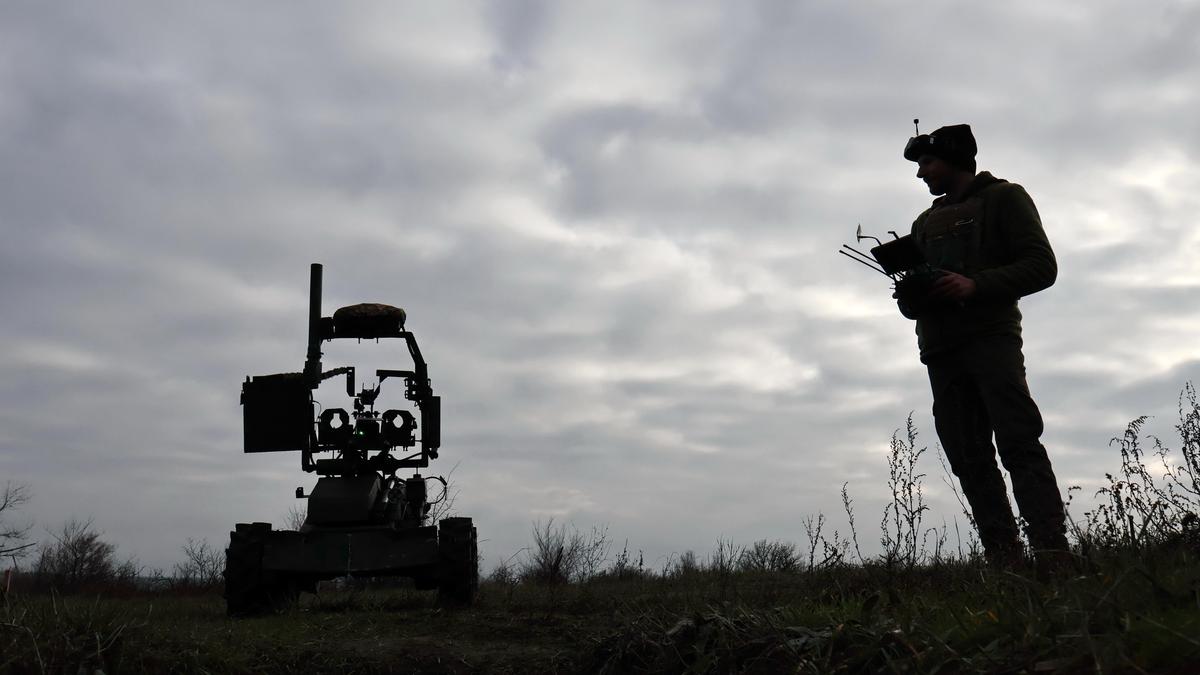
The conflict in Ukraine has established drones as a primary instrument of modern combat, fundamentally altering the traditional balance of power. While Russia maintains a vast superiority in infantry and heavy armor, Ukraine has utilized innovation to bridge the gap. For as little as $300 to $500, First-Person View (FPV) kamikaze drones are capable of neutralizing multi-million dollar assets, including tanks and artillery pieces.
Technical advancements have moved beyond small-scale reconnaissance. Ukrainian production now includes:
- Long-range strike systems: Capable of reaching targets 600 to 1,000 kilometers away, shifting the perception of domestic safety.
- Humanitarian drones: Remotely operated units used to provide cover or assist in the extraction of wounded personnel from active fire zones.
- Industrial-scale manufacturing: Domestic output has surged to tens of thousands of units monthly, supported by private sector contributions and diaspora funding.
Comparative Regional Impacts
The reality of drone proliferation was felt in the South Asian context between May 7 and May 10, 2025, following the Pahalgam incident. During this period, India and Pakistan engaged in drone exchanges over four nights. While no casualties were reported, the psychological impact and physical damage from falling debris highlighted a new era of border tension. As the Ukraine conflict proves that tanks without drone support are increasingly vulnerable, the strategic necessity of these systems has become an unavoidable reality for defense planners worldwide.
Source: The Hindu — World
Related stories
Europe Grapples with Fatal Wildfires as Heatwaves Persist Across the Continent
Ortega Tightens Grip With Constitutional Revision to Extend Presidential Power
Execution-Style Murder Claims Six Labors Following Kech District Abductions
