Why is Trump targeting Iran’s Pickaxe Mountain nuclear site? Here’s what we know
U.S. President Donald Trump has escalated tensions with Iran by threatening to bomb the under-construction Pickaxe Mountain nuclear site, located south of Tehran. Why is he targeting it?

U.S. President Donald Trump has repeatedly issued threats to bomb Pickaxe Mountain, an under-construction Iranian nuclear site buried deep under a mountain.
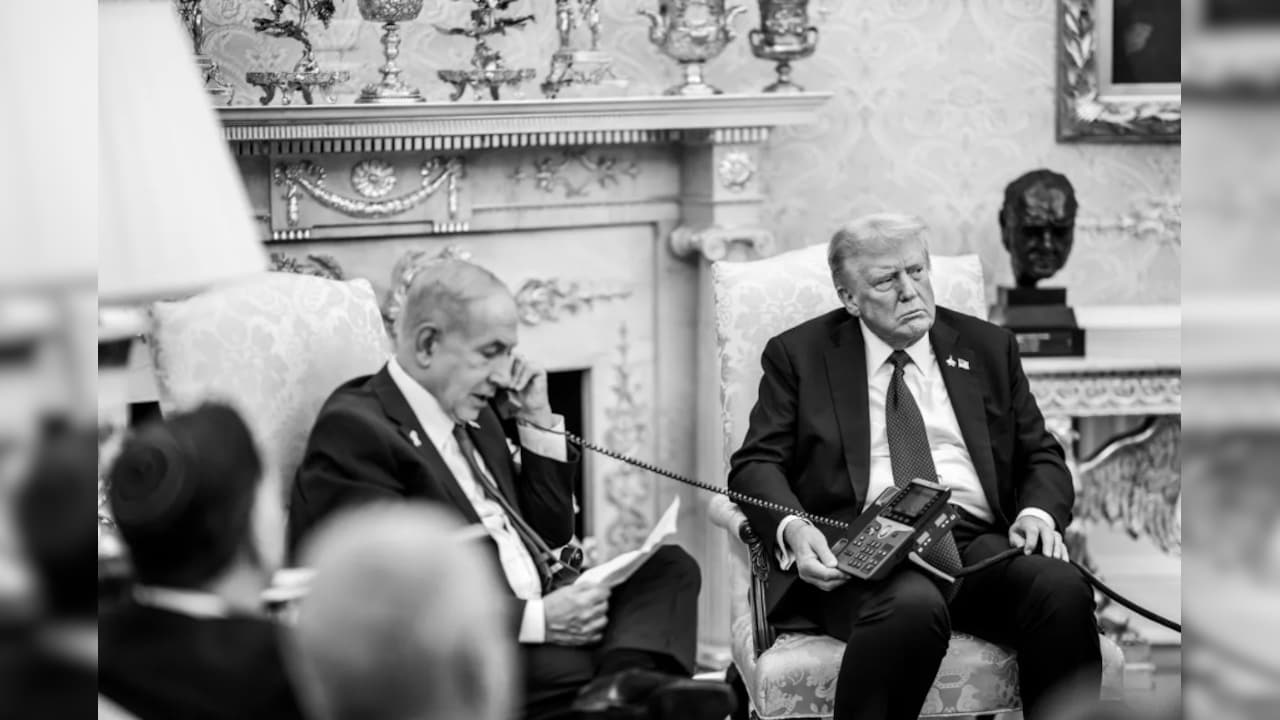
“We'll be hitting that area ... probably pretty soon. And there's not a thing they can do about it,” Mr. Trump said on Tuesday (July 21, 2026) talking to journalists at the Oval Office, Washington.
This fortified site has thus become a focal point of tension as the situation escalates over the Strait of Hormuz.
What is Pickaxe Mountain and why is it targeted by Trump?
The site, referred to as Kuh-e Kolang Gaz, or “Pickaxe Mountain,” is situated to the south of Iran’s Natanz nuclear enrichment facility. This site was targeted by the United States during Operation Midnight Hammer, part of the 12-day conflict between Iran and Israel in 2025. However, Pickaxe Mountain has remained unscathed while Iran continues its excavation activities in the area.
The Pickaxe Mountain site, located about 225 kilometres south of Tehran, next to Natanz, has been constructed in response to earlier attacks on Iran’s nuclear infrastructure. Natanz, which includes both above-ground and underground facilities, has raised international concerns since it became known two decades ago. Repeated sabotage attacks, notably one attributed to Israel that destroyed a centrifuge manufacturing site, prompted Iranian officials to develop the Pickaxe Mountain site.
Also read: U.S.-Iran tensions LIVE updates
Protected by anti-aircraft batteries, fencing and Iran’s paramilitary Revolutionary Guard, the facility sprawls across 2.7 square kilometres in the country’s arid Central Plateau. It has multiple entrances visible from satellite images.
Recently, President Trump mentioned Pickaxe Mountain as a possible target for bombing, especially since tensions between Iran and the U.S. are rising. While speaking with Lebanese President Joseph Aoun, Mr. Trump highlighted Iran’s stockpile of enriched uranium and said that the U.S. would likely attack that area soon. He has also acknowledged the possibility that Iran may have moved centrifuges there, potentially at a depth that would challenge even the most powerful bombs in America’s arsenal. Moreover, its location, protected from prior military strikes, allows Iran to advance its nuclear program beyond the capabilities of standard airstrikes.
Why did Iran build Pickaxe Mountain?
According to AP reports, the size of the construction project indicates Iran will likely be able to use the underground facility to enrich uranium as well as to build centrifuges.
Centrifuges, tube-shaped devices arranged in large cascades of dozens of machines, rapidly spin uranium gas to enrich it. Additional cascades spinning would allow Iran to quickly enrich uranium under the mountain’s protection.
Is this nuclear facility functional?
The Institute for Science and International Security (ISIS), in its report, said its assessment “is that the facility is not yet operational, but construction continues”, and that it was unclear when it could be operational, based on satellite imagery alone.
“It is also unclear if Iran still plans on installing a large-scale assembly facility, given the destruction of Iran’s centrifuge programme, including Iran’s ability to make centrifuge components needed for an assembly plant.
Also read| Far from over: On the U.S.-Iran conflict
“Nonetheless, if Iran starts to rebuild its centrifuge manufacturing capability, it could plan to install a smaller centrifuge assembly facility in Pickaxe Mountain able to serve a nuclear weapons program,” ISIS said.
What happens if the Pickaxe Mountain site is attacked?
An attack on the nuclear site might drive Iran’s nuclear operations even deeper underground, completely ending diplomatic oversight and accelerating their pursuit of a weapon.
The U.S. and Iran signed an interim memorandum of understanding on July 17 that suspended military operations, called for the reopening of the Strait of Hormuz and set a 60-day timeframe for negotiating a permanent agreement, including terms covering Iran’s nuclear program. However, the memorandum did not clarify how the future management of the Strait of Hormuz would be handled.
(With Agencies inputs)
Source: The Hindu — World