Road safety board set up, but debate over powers persists

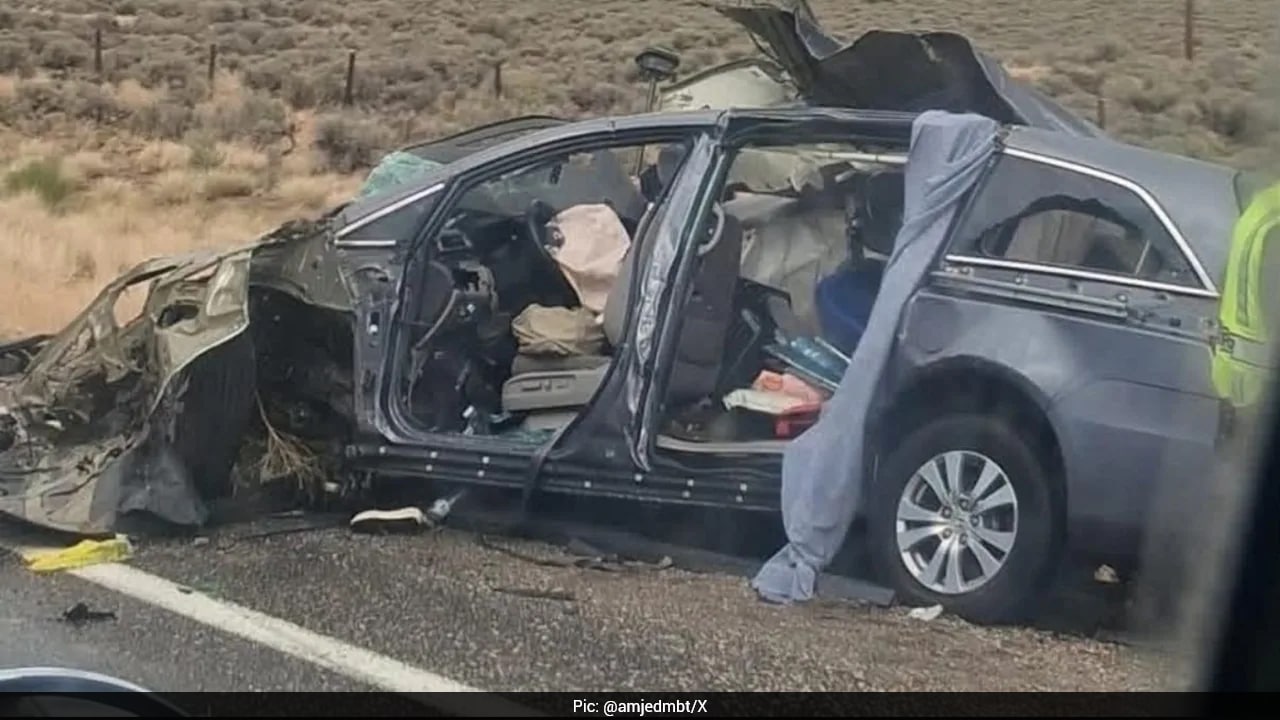
Road accidents claimed 1,77,175 lives in 2024, as per the latest report of the Ministry of Road Transport and Highways.
With road fatalities reaching a record 1,77,175 in 2024, according to the latest Road Accidents in India report of the Ministry of Road Transport and Highways, the Centre has finally constituted the National Road Safety Board.
The move to set up the statutory body, tasked with advising the Centre and States on road safety, has been welcomed as a significant institutional step. However, experts are divided over whether its advisory role is enough to address road safety issues or if it dilutes earlier proposals for a stronger regulatory body.
Constituted on June 29 under Section 215B of the Motor Vehicles Act, the board comprises experts and officials from the Union and State governments.
The idea of a dedicated national road safety regulator dates back to the Sundar Committee’s 2007 report, which proposed a board with powers to prescribe standards, monitor compliance, conduct safety audits, and coordinate action across agencies.
However, when the National Road Safety and Traffic Management Board Bill, 2010 was introduced in Parliament, it was largely confined to dealing with highways and mechanically propelled vehicles.
The Parliamentary Standing Committee on Transport in its July 2010 report observed that many of the board’s proposed functions were already being discharged by existing institutions. It concluded that the Bill merely created “yet another institution” without adequately empowering it to coordinate with existing agencies.
Meanwhile, the Supreme Court became a parallel force driving road safety reforms through the public interest litigation case, S. Rajaseekaran v. Union of India, which it has been hearing since 2012.
As recently as May 2026, the apex court pressed the Central government to operationalise the National Road Safety Board, noting that although the statutory provision had come into force and the rules were notified in September 2021, the board itself had not been constituted.
The board’s creation marks an important milestone, but falls well short of the regulator envisaged by earlier expert committees, according to Shubham Kumar, lead, policy advocacy, at Crashfree India.
“The board is under mandatory duty to advise while authorities receiving that advice remain under no equally clear duty to respond,” he said.
Differing stand
Not all experts agree that the solution lies in creating a more powerful regulator.
Swapnil Tripathi, lead, Charkha, at Vidhi Centre for Legal Policy, said the advisory structure of the board is consistent with the country’s constitutional scheme, where legislative competence over road safety is shared between the Union and State governments. Mr. Tripathi added that granting the board powers over State governments could create federal tensions and lead to jurisdiction disputes.
Published - July 22, 2026 01:23 am IST
Source: The Hindu — Cities