
Leopard killed in wire trap: Forest probe cracks suspected poaching network
2 min readJul 22, 2026 10:07 PM IST
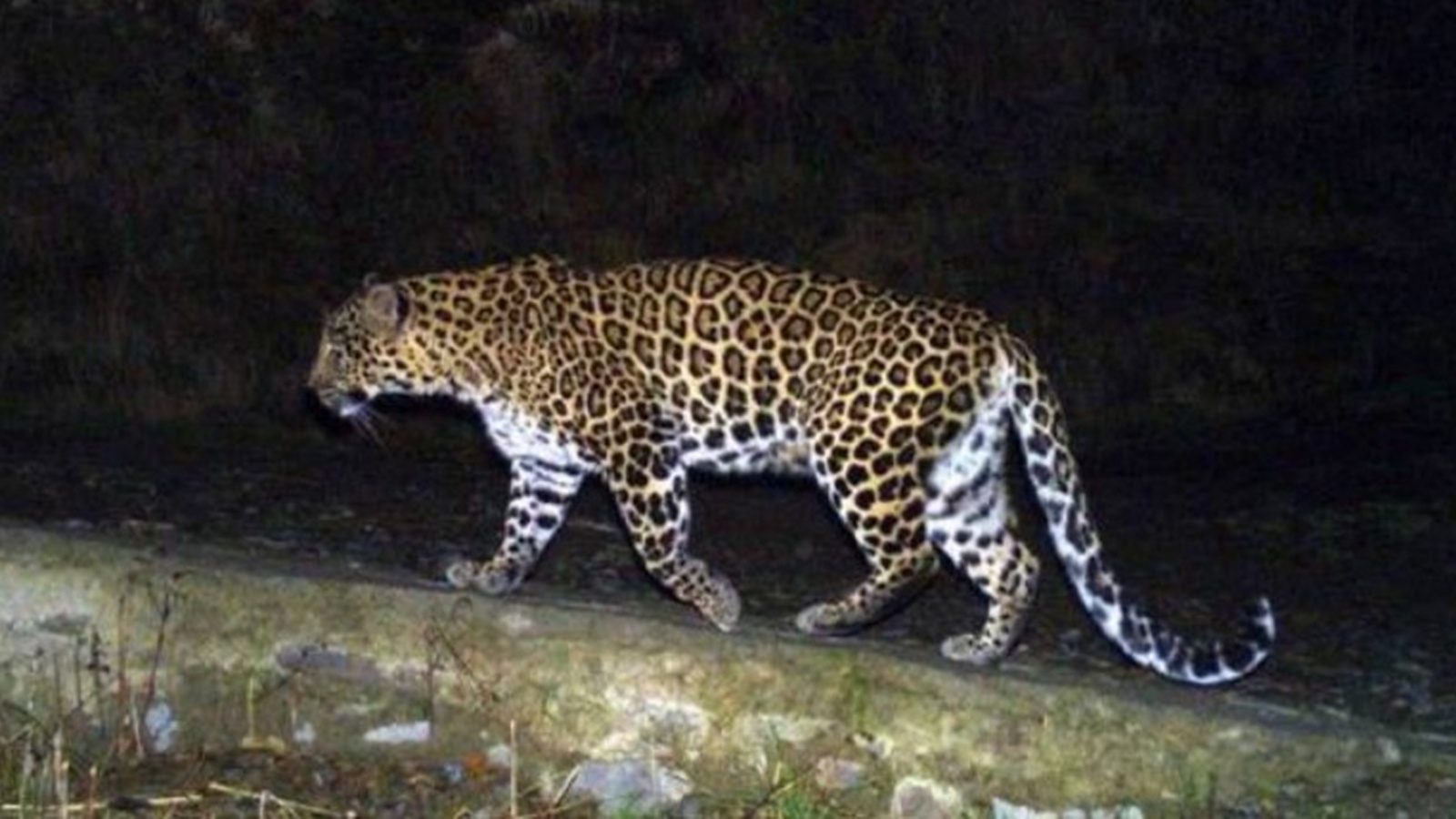
The female leopard was caught in wires allegedly set up by poachers in the buffer area of Kota's Mukundara Hills Tiger Reserve. (Representational Photo)
A team investigating the death of a leopard found snared in wires in the buffer zone of Mukundara Hills Tiger Reserve has made a breakthrough, with officials suspecting a poaching case.
The female leopard was caught in wires allegedly set up by poachers in the buffer area of Kota’s Mukundara Hills Tiger Reserve. Officials said her body was recovered on July 18. The incident has led to increased patrolling across the area.
“The female panther was approximately 3-4 years old and was frequently moving within the buffer area of the Borabas Range,” Chief Conservator of Forests (CCF) Suganaram Jat said. “The trap, a strong snare of clutch wires or GI wires, were set up to catch wild boar or other animals.”
The investigation led to the arrest of Vishal Harijan, a resident of Nayagaon, under the Wildlife (Protection) Act, 1972. Investigators claimed to have recovered about 2 kg of potash, clutch wire, two knives, thick wire and a mobile phone from his home. He has been remanded to the forest department’s custody.
“Usually, clutch wires are used for catching herbivores such as wild boars. To catch a leopard or a tiger, poachers usually use foot traps,” CCF Jat said.
Typically, potash — recovered from the suspect’s home — is mixed with food to lure animals. Once ingested, it explodes in the animal’s mouth, killing it.
Wild boar meat is currently priced at Rs 1,000/kg.
Recent wildlife-poaching cases in Rajasthan point to a wider problem. In 2026, authorities arrested seven accused in cases involving the alleged poaching of more than a dozen chinkaras in Jaisalmer. Meanwhile, a separate case involved the alleged hunting down of two chinkaras.
Story continues below this ad
In 2025, the Directorate of Revenue Intelligence (DRI) seized two leopard hides and 18 leopard nails in Rajsamand and detained five people. Meanwhile, 2024 data shows that the two more cases were registered under the Wildlife Protection Act in 2024.
Around 12 people were arrested in 2025 for killing monkeys in Rajsamand district.
Parul Kulshrestha is a Principal Correspondent for The Indian Express, based in Rajasthan. A lawyer turned journalist, she brings a unique cross-disciplinary perspective to her reporting, blending legal precision with deep social inquiry to cover one of India's most culturally and politically vibrant regions. Expertise and Experience Legal-Journalistic Synergy: Parul’s transition from a legal background to mainstream journalism provides her with a distinct advantage in interpreting policy, legislation, and judicial impacts. This expertise allows her to "read between the lines" of government orders and court rulings affecting the public. Diverse Beat: With years of experience across both mainstream newsrooms and independent journalism, she has built high-level authority in several critical areas: Nomadic Tribes & Marginalized Communities: She is recognized for her sensitive and in-depth reporting on the struggles and rights of Rajasthan's nomadic populations, often giving a voice to those outside the traditional political spotlight. Gender & Social Justice: Parul focuses on the intersection of law and gender, covering issues ranging from women’s safety and reproductive rights to the socio-economic empowerment of rural women. Environmental & Political Reporting: She tracks Rajasthan’s complex political landscape—including electoral shifts and bureaucratic changes—alongside critical environmental concerns like water scarcity and land use. Academic & Professional Pedigree: Her background as a lawyer, combined with her rise to the rank of Principal Correspondent at a national broadsheet, establishes her as a senior voice in the media landscape. ... Read More
- Tags:
- leopard
Source: Indian Express
